About this project
Most text-to-SQL demos let the model write the query and hope. This product takes the opposite position: the model only ever returns structured JSON, and deterministic code validates it, compiles the SQL, freezes the plan and runs it. A number that cannot be traced to a row and a column does not appear in the answer.
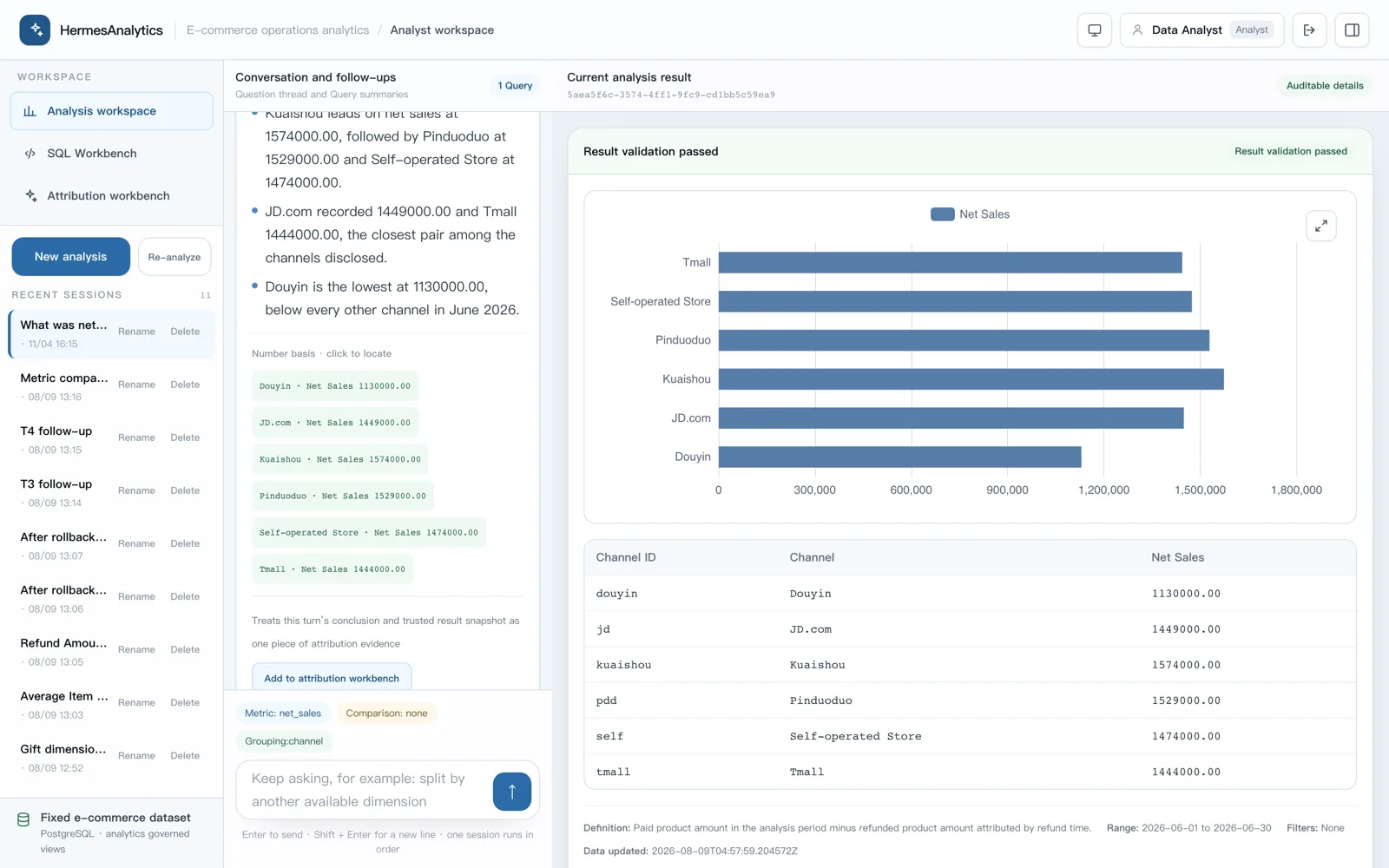
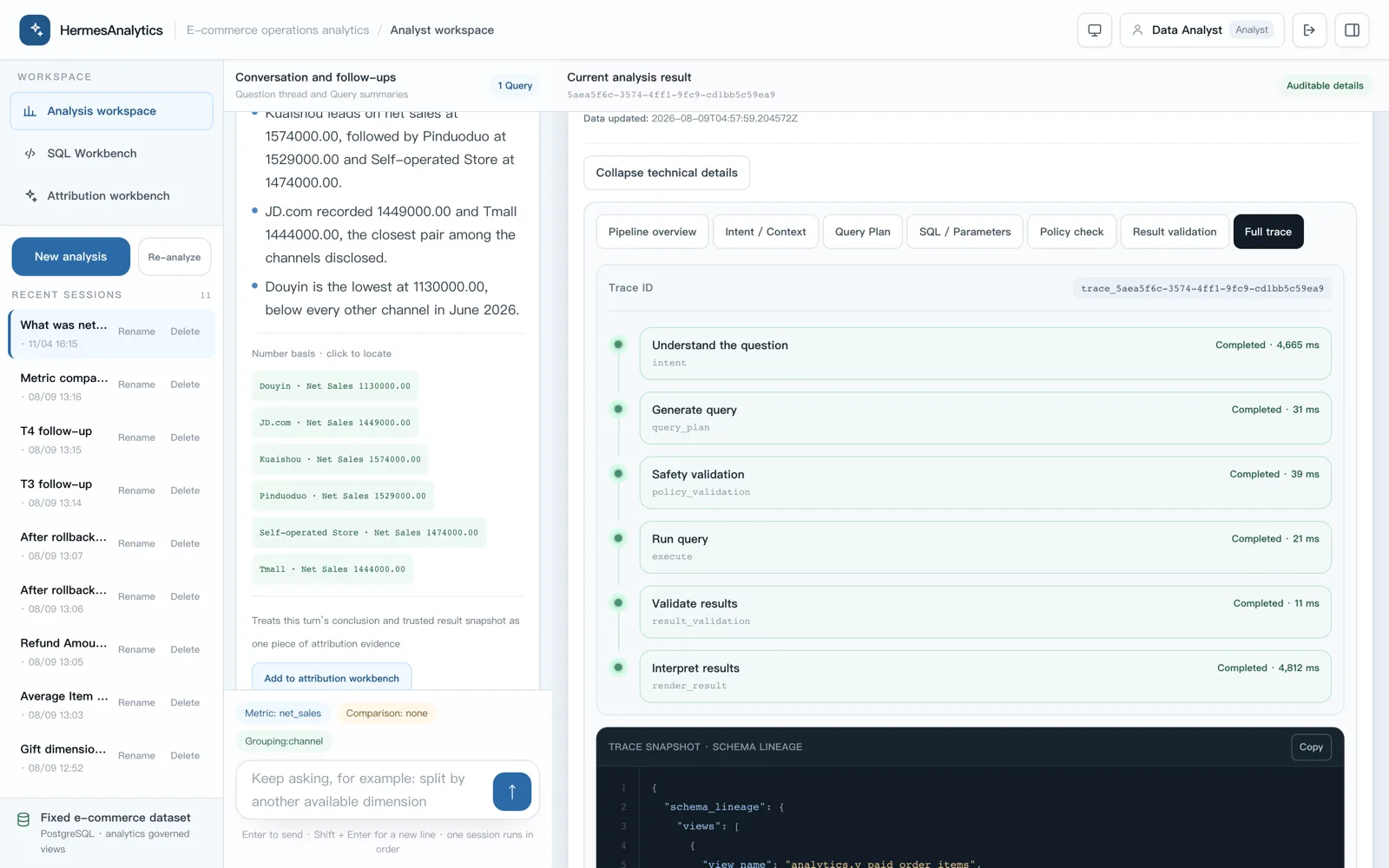
Hermes Analytics is a single-tenant, self-hosted analytics workspace. An analyst asks about Net Sales, Paid Orders, Paying Buyers, Average Order Value or Refund Rate, broken down by time, channel, product or region. The turn walks six stages — intent, query plan, policy validation, execution, result validation, interpretation — and stops at a human confirmation point with the frozen SQL and its named parameters on screen. Nothing executes until the analyst confirms.
The result is a chart, a table and a written answer, and every figure in that answer is a reference back to the cell it came from; the model may quote server numbers but it may not compute totals, differences, shares or averages itself. A separate attribution workbench turns completed analyses into frozen evidence and runs a two-sided debate under a judge that decides only after both sides cross the same barrier. The SQL Workbench opens the frozen plan with the statement locked and only named parameters adjustable, or accepts free SQL under the same server-side validation.
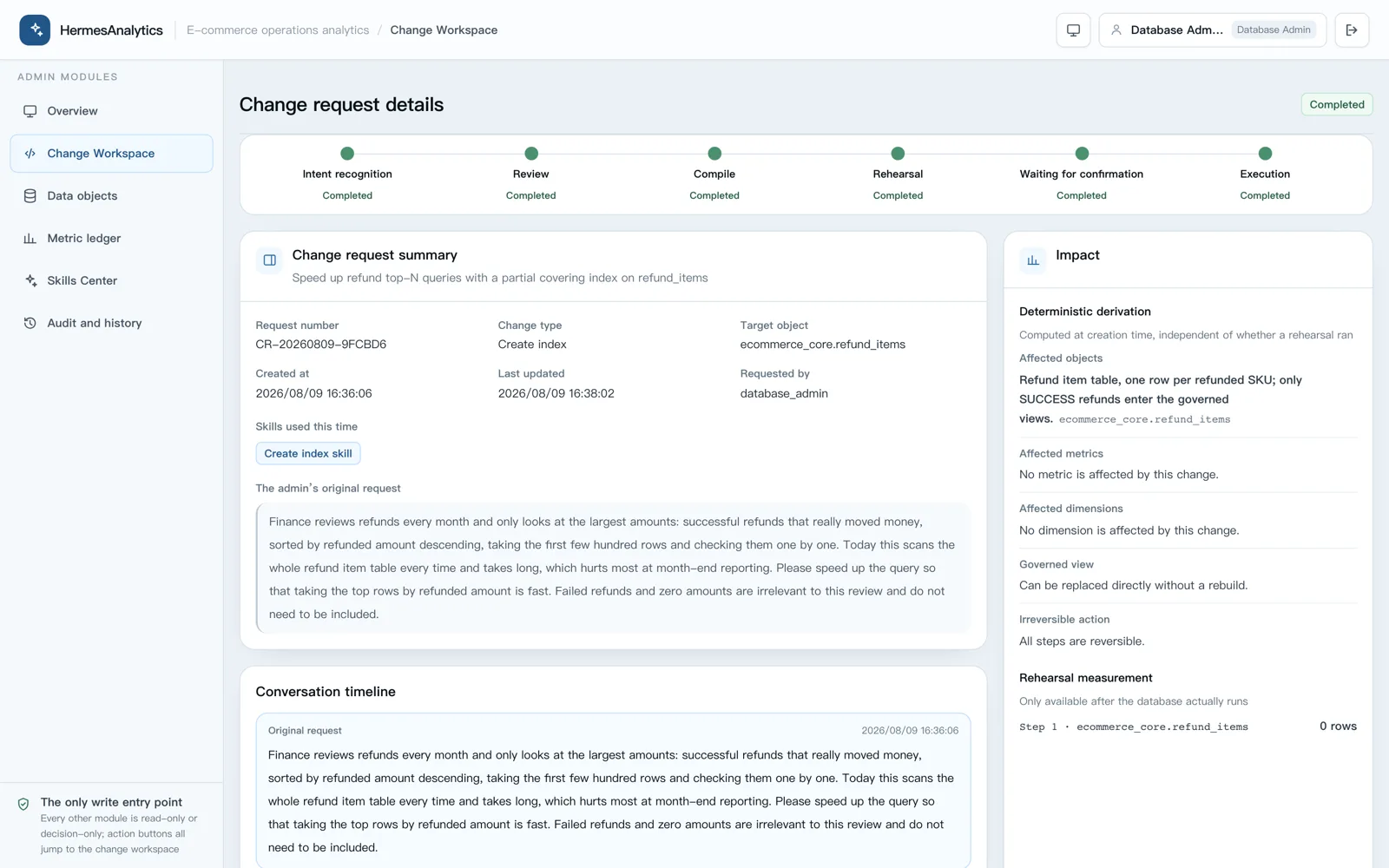
The administrator side is a governed write path. One sentence becomes a seven-stage change request that can cross table structure, Governed Views and the semantic layer; a transaction-wrapped dry run reports measured impact, two gates protect execution, and a post-execution fingerprint comparison detects tampering. Skill conventions accumulate only from reviews of real change requests, and an administrator accepts or voids each proposal as a whole.
Read it for the trust boundary — a model that plans but cannot execute, a compiler that is the only thing touching SQL, and an evidence model where the answer is a set of coordinates rather than prose. The stack is four Compose services, only the frontend publishes a port, and the data network has no outbound route.
What you get
- Full source code
- Private GitHub repository with commit history
- Setup guide and architecture notes
- Lifetime updates
Questions
What do I actually get?
The complete source of the project as a private GitHub repository, with its commit history, a setup guide and the architecture notes that ship with the code.
How is access delivered?
After checkout you are invited to the GitHub organisation that hosts the repositories. Accept the invitation and the project appears in your account.
Is this a subscription?
No. A single project and all-access are both one-time purchases. There are no seats, renewals or trials.
What happens when a project is updated?
Updates land in the same private repository you already have access to. Pull them whenever it suits you.